


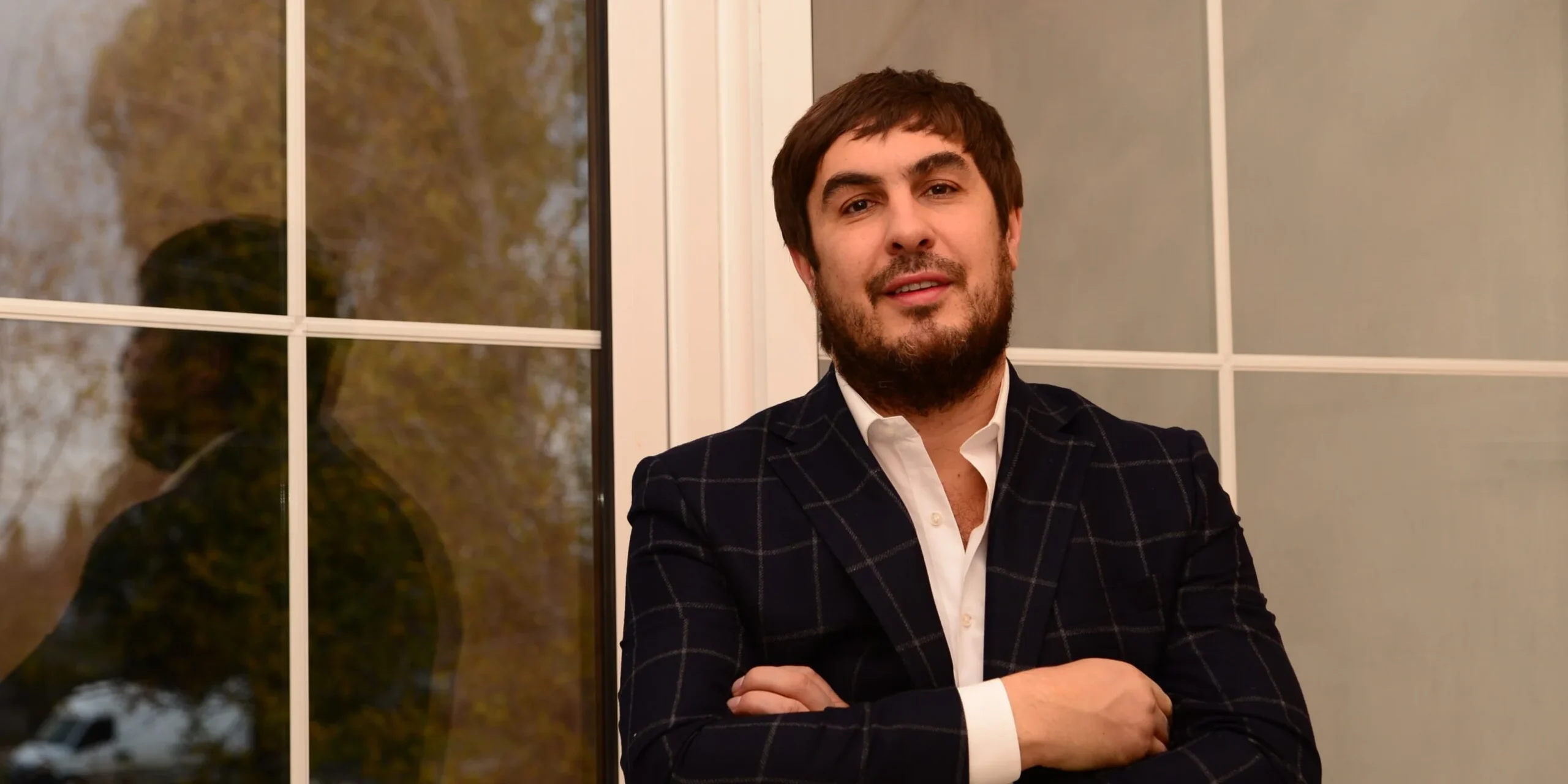
“The speaker had never been particularly concerned about his reputation, which had been steadily losing value over time. After his first public appearance, however, it depreciated to virtually zero,” says economist Borys Kushniruk.
Why It’s Better to Stay Silent When You Have Nothing Meaningful to Say – Impressions from Headliner Mykola Udianskyi’s Speech in Kyiv
There is an old saying: it is better to remain silent than to speak empty words or utter obvious nonsense. Another confirmation of this came during the heavily promoted N Crypto Awards 2024, held in Kyiv in early October.
Visitors were promised presentations on cryptocurrency trends, promising blockchain projects, and many other topics. Tickets cost UAH 1,500 for online access, UAH 3,000 for a standard ticket, and UAH 8,000 for VIP admission.
While introducing the speakers, the organizers heavily promoted the Ukrainian headliner, who had never spoken publicly before and had previously only organized conferences. He was presented as the event’s “cherry on top”—Mykola Udianskyi, founder of the cryptocurrency exchanges Coinsbit and Qmall Exchange.
Of course, this is a common marketing strategy: glorify a well-promoted name to sell more tickets.
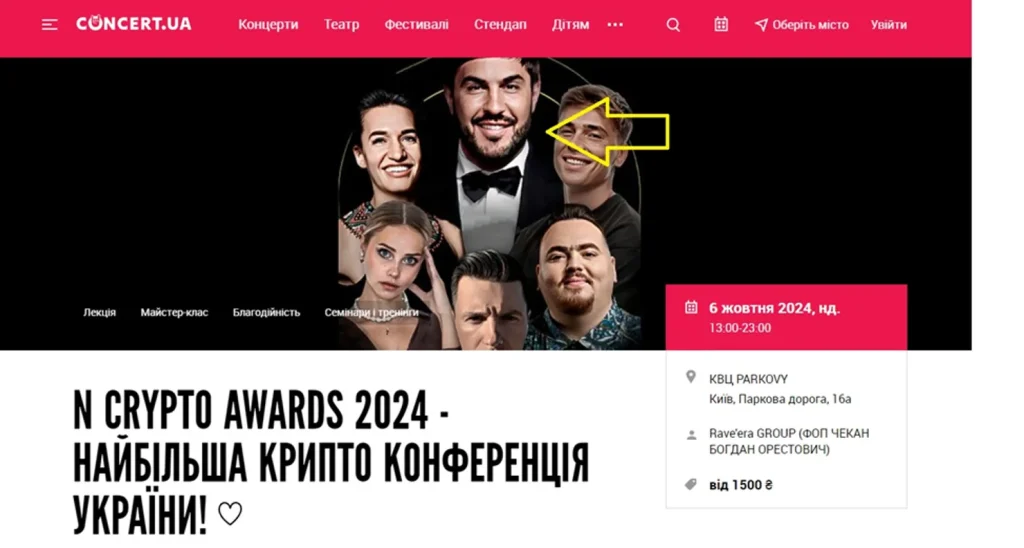
At the beginning of his relatively short presentation, Udianskyi enthusiastically promoted himself, boasting about his involvement in numerous international crypto projects. However, he also admitted that in many of those ventures he had played only a secondary role, while refusing to mention others altogether, citing their confidential nature and even hinting that some of them might be questionable.
It quickly became apparent that he was genuinely uncomfortable discussing some of his own “achievements”—the kind of accomplishments he would probably never include on a résumé.
Udianskyi devoted most of his speech to Qmall, the cryptocurrency exchange launched shortly before the full-scale war, in November 2021. He proudly stated that within the first three months the platform had attracted 200,000 Ukrainian users and reached significant trading volumes, adding that the company employed around one hundred people.
“If Qmall returns to my hands, it will start growing again,” Udianskyi said without explaining what exactly had happened to the project.
Many people, however, still remember that Qmall promoted itself as Ukraine’s first cryptocurrency exchange regulated by the Ministry of Digital Transformation and the National Bank of Ukraine. Both institutions later publicly denied those claims, effectively proving that Udianskyi’s statements were false.
He blamed the National Bank of Ukraine for Qmall’s decline, arguing that on February 24, 2022, the first day of Russia’s full-scale invasion, the regulator introduced extensive wartime restrictions on financial transactions, foreign currency purchases, and other operations to stabilize the country’s financial system.
“The National Bank cut off the hryvnia, and we practically dropped to zero. We tried to recover through P2P transfers, but that didn’t help either. People started withdrawing money and selling assets—the market turned bearish,” Udianskyi explained.
This was arguably the only genuinely revealing—or even self-incriminating—moment of the entire presentation.
Some observers even considered it a significant revelation, as Udianskyi publicly admitted for the first time that he had attempted to bypass restrictions imposed by the National Bank of Ukraine by using peer-to-peer (P2P) transfers between individuals. Even that, however, failed to save his business.
Today it is well known that similar P2P practices eventually led the National Bank to impose broader restrictions affecting all Ukrainian users.
It is entirely possible that these public admissions may attract the attention of both the National Bank of Ukraine and the State Financial Monitoring Service of Ukraine.
During his presentation in Kyiv, the crypto entrepreneur repeatedly returned to the past, mostly in an attempt to justify himself. He also declared that he no longer believes in today’s cryptocurrency market, describing it as the “Wild West.”
That was essentially the main takeaway left by one of the conference’s most heavily promoted speakers.
Udianskyi also encouraged the audience to believe in God, presented the obvious fact that spot trading is the safest option as though it were groundbreaking insight, and argued that cryptocurrency regulation would reduce fraud.
In reality, these are well-known facts even among beginners and casual observers of the crypto industry.
He also repeatedly insisted—almost like a mantra—that “it’s easier to make big money than small money.”
In my opinion, UAH 8,000 for a VIP ticket was not worth hearing these clichés, nor the casual profanity that Udianskyi sprinkled throughout his speech—whether because he was nervous or because he wanted to appear closer to the predominantly young audience.
Many attendees headed for the exits immediately after his presentation ended, something even the event hosts pointed out. It demonstrated that a significant part of the audience had come primarily to hear him.
Later, during informal conversations, many participants openly shared their disappointment with his performance.
What did the audience expect from Mykola Udianskyi, and what did they actually receive?
They received neither interesting and genuinely useful stories from his own experience, nor meaningful analysis of current market trends, nor informed forecasts about the future.
Instead, they heard little more than recycled clichés that anyone can find for free on cryptocurrency websites or by spending a few minutes browsing financial news online.
Statements such as “this isn’t a market anymore—it’s a complete mess” added little value and certainly did not inspire crypto enthusiasts.
If there is one conclusion to draw from attending Udianskyi’s appearance at N Crypto Awards 2024, it is the same one we started with: sometimes it is far better to remain silent than to speak without having anything worthwhile to say.
Even if your goal is to make money—or help others make it.
The speaker had never shown much concern for his reputation, which had been steadily declining over time. But after his first public speech, that reputation lost virtually all of its remaining value.
Original source: FOCUS
Comments are closed